


News

News
For egg tray manufacturers, energy is often the second-largest operating expense after raw materials — and it is the cost that most buyers underestimate when evaluating an egg tray machine. A machine that appears attractively priced at purchase can end up costing tens of thousands of dollars more per year in excessive energy consumption, eroding profit margins and undermining the business case for the investment. In an industry where profit margins are often 15–25% and energy costs continue to rise globally, reducing energy consumption is not just an environmental choice — it is a direct path to higher profitability. In this guide, we break down where energy is consumed in an egg tray production line, how to compare machine energy efficiency, practical strategies for reducing energy use, and how to calculate the real cost of energy in your egg tray business.
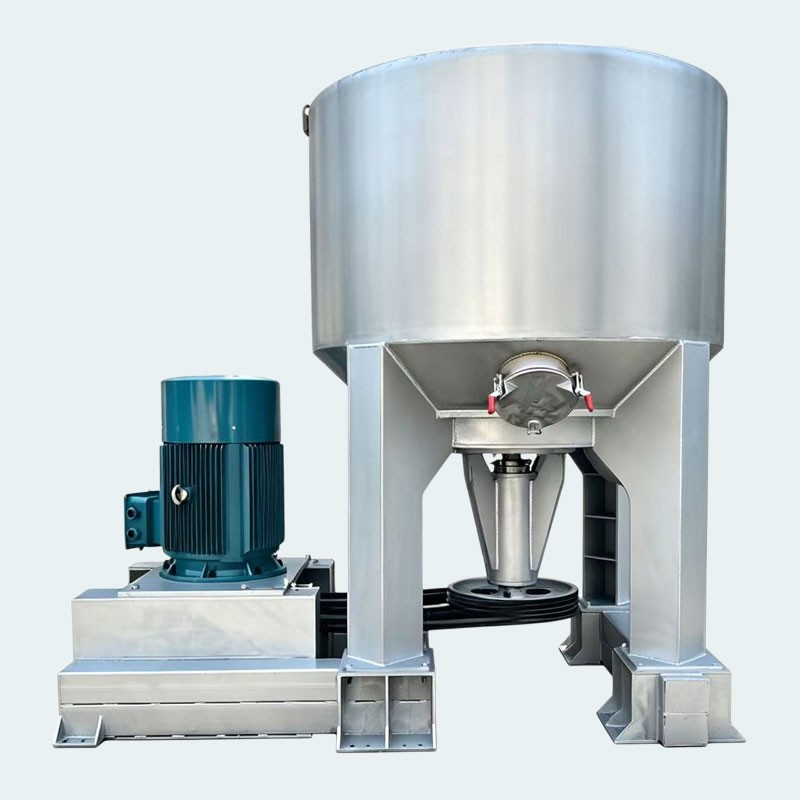
Before you can reduce energy consumption, you need to understand where it is used. A typical egg tray production line consumes energy in four main areas, each with very different efficiency characteristics:
Hot press drying system (40–60% of total energy): The hot press is by far the largest energy consumer. It uses electricity (heating rods) or gas/steam to heat the press platens to 150–220°C, evaporating water from the wet pulp product. Because water has a very high latent heat of vaporization (2,260 kJ/kg), removing moisture is inherently energy-intensive — making the hot press the primary target for efficiency improvements.
Vacuum system (15–25% of total energy): The vacuum pump creates the suction that draws pulp fibers onto the forming mold and removes excess water from the wet product. Vacuum pumps run continuously during production and can consume significant electricity, especially if undersized, poorly maintained, or operating with leaky vacuum lines.
Main drive and forming system (10–20% of total energy): The main motor drives the forming drum or forming plate, transfer mechanism, and associated mechanical components. Energy consumption here depends on machine design, mechanical efficiency, and operating speed.
Auxiliary equipment (10–15% of total energy): This includes the pulper/agitator, water pump, air compressor, conveyor belts, trimming machine, control system, and lighting. While individually small, these auxiliary loads add up and run for long hours.
Understanding this breakdown is critical: if you want to reduce energy consumption by 20%, focusing on the hot press (which represents 50% of total use) will deliver far more impact than optimizing auxiliary equipment (10–15%).
When evaluating different egg tray machine models or suppliers, raw installed power (kW) is not the right metric — a machine with higher installed power may actually consume less energy per tray if it operates more efficiently. The correct metric is specific energy consumption: kilowatt-hours per 1,000 trays (kWh/1,000 trays), or for gas-heated machines, megajoules per 1,000 trays (MJ/1,000 trays).
Typical specific energy consumption ranges:
Inefficient/older machines: 20–30+ kWh per 1,000 trays (electric heating), often due to uninsulated hot presses, poor vacuum system design, and mechanical inefficiencies.
Average modern machines: 12–18 kWh per 1,000 trays (electric heating), with basic insulation and standard vacuum systems.
Efficient machines: 8–12 kWh per 1,000 trays (electric heating), with well-insulated hot presses, optimized vacuum systems, variable-speed drives, and efficient mechanical design.
Gas/steam-heated machines: 40–80 MJ per 1,000 trays (thermal energy), which typically translates to 30–60% lower energy cost than electric heating in regions with low gas prices or available industrial steam.
Always ask suppliers for specific energy consumption data (kWh or MJ per 1,000 trays) under standard operating conditions, and compare this metric across machines — not just purchase price or installed power. A machine that costs $5,000 more upfront but consumes 5 kWh less per 1,000 trays will save approximately $3,000–$6,000 per year in energy costs (at $0.10–$0.20/kWh, producing 5 million trays/year), paying back the price premium in less than a year.
Since the hot press consumes 40–60% of total energy, it offers the greatest savings potential. Key optimization strategies:
Insulate hot press platens and surfaces: Uninsulated hot press surfaces radiate significant heat into the factory environment — wasting energy and raising ambient temperature. Adding high-temperature insulation (ceramic fiber or mineral wool) to press platens, side panels, and piping can reduce heat loss by 30–50%, cutting hot press energy consumption by 15–25%. This is one of the lowest-cost, highest-return energy efficiency upgrades available.
Optimize press temperature and cycle time: Running the hot press at higher temperature than necessary wastes energy. Work with your supplier or conduct trials to find the minimum temperature and shortest cycle time that achieves proper drying and product quality. Reducing press temperature by 10–15°C can cut energy use by 5–10% with no impact on product quality if the cycle time is adjusted appropriately.
Use gas or steam heating instead of electric: If natural gas or industrial steam is available at your facility, switching from electric to gas or steam heating can reduce energy costs by 30–60% (depending on local gas and electricity prices). Gas-fired hot presses also heat up faster and provide more uniform temperature distribution. Many modern machines, including our one water and one heat automaton, can be configured with gas or steam heating options.
Implement heat recovery: The hot press exhausts large volumes of hot, moist air. Heat recovery systems can capture this waste heat and use it to preheat incoming air, heat the factory, or preheat process water — reducing the net energy required for drying. While heat recovery systems require investment, they often pay back within 1–2 years for high-volume operations.
Minimize opening time: Every time the hot press opens, heat escapes. Optimize product transfer speed and press opening/closing cycles to minimize the time the press is open. Automated transfer systems (robotic arms, conveyor transfer) are faster and more consistent than manual transfer, reducing heat loss and improving energy efficiency.
Maintain heating elements: Degraded or burned-out heating elements reduce heating efficiency and cause uneven temperature distribution, forcing the press to run longer or hotter to achieve proper drying. Regularly inspect and replace heating elements, and verify thermocouple accuracy to ensure the press is operating at the correct temperature.
The vacuum system is the second-largest energy consumer and often the most inefficient due to leaks, poor maintenance, and oversizing. Optimization strategies:
Eliminate vacuum leaks: Leaky vacuum hoses, fittings, and seals force the vacuum pump to work harder to maintain required vacuum level — wasting electricity and reducing forming performance. Conduct regular leak detection (using ultrasonic leak detectors or soapy water), and replace worn hoses, fittings, and seals promptly. A vacuum system with 10–15% leakage can consume 20–30% more electricity than a leak-free system.
Right-size the vacuum pump: An oversized vacuum pump consumes more electricity than necessary, while an undersized pump cannot maintain adequate vacuum (causing forming defects and requiring longer cycle times). Work with your supplier to ensure the vacuum pump is correctly sized for your machine's forming area and production speed.
Use variable-speed vacuum pumps: Traditional vacuum pumps run at full speed continuously, regardless of actual vacuum demand. Variable-speed drive (VSD) vacuum pumps adjust speed to match demand, reducing electricity consumption by 20–40% during partial-load operation (which is common during startup, product changeover, and lower-speed production).
Maintain vacuum pump regularly: A poorly maintained vacuum pump (dirty inlet filter, degraded oil, worn vanes) loses efficiency over time, consuming more electricity to produce the same vacuum. Follow the manufacturer's maintenance schedule — regular oil changes, filter replacement, and annual rebuilds maintain pump efficiency and extend service life.
Optimize vacuum level: Running at higher vacuum than necessary wastes energy. Conduct trials to determine the minimum vacuum level that achieves consistent, defect-free forming, and set the vacuum regulator accordingly. Reducing vacuum by 5–10% can cut vacuum pump energy use by 10–15%.
Use variable-speed drives (VSD) on main motors: VSDs allow the main drive motor to operate at the optimal speed for current production requirements, rather than running at full speed continuously. This reduces energy consumption during startup, product changeover, and lower-speed production, and also reduces mechanical wear. VSDs typically reduce main motor energy use by 15–30%.
Ensure proper lubrication: Well-lubricated bearings, chains, and gears reduce friction — directly reducing the energy required to drive the machine. Follow the manufacturer's lubrication schedule and use the specified lubricants. Over-lubrication can also increase friction and energy use, so follow recommended quantities.
Maintain proper alignment: Misaligned shafts, pulleys, and gears increase friction, vibration, and energy consumption — and accelerate component wear. Check alignment during monthly maintenance and after any component replacement or major servicing.
Optimize production speed: Running the machine at maximum speed does not always maximize profit. Higher speed increases energy consumption per tray (due to shorter cycle times requiring more vacuum and heat), increases wear and tear, and may increase defect rates. Find the optimal production speed that balances output, energy consumption, and product quality — this is often 80–90% of maximum rated speed.
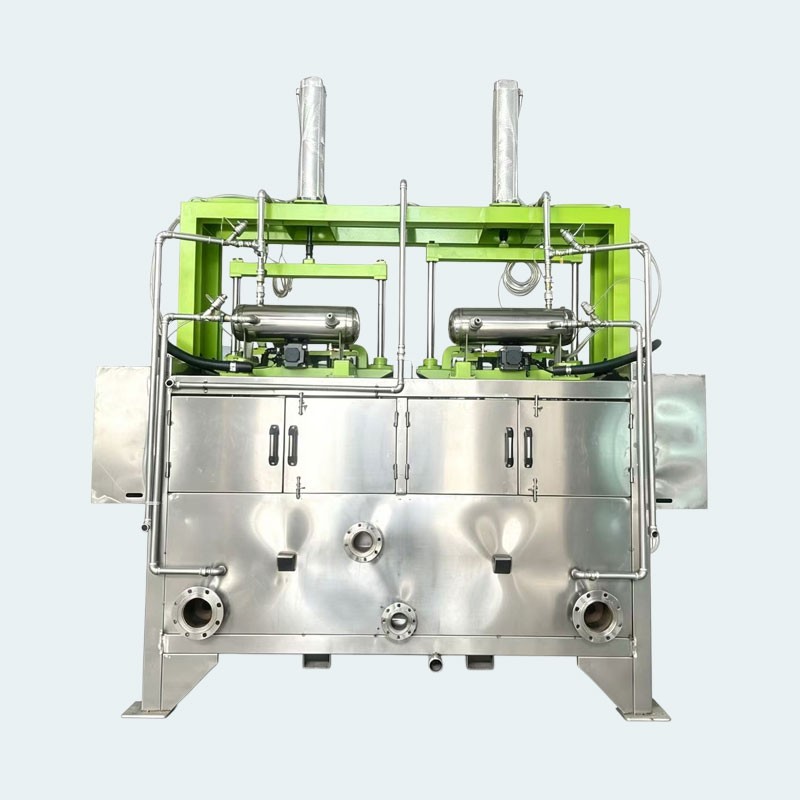
Optimize pulper operation: The pulper/agitator can be a significant energy consumer if run continuously. Install a level sensor or timer to run the pulper only when pulp level is low, rather than continuously. Use high-efficiency agitator motors and ensure proper impeller design to minimize energy use per tonne of pulp.
Use efficient water pumps: Replace old, inefficient water pumps with high-efficiency models, and install VSDs to match pump output to actual demand. Ensure water filters are clean to reduce pump head pressure and energy consumption.
Optimize compressed air system: Compressed air is one of the most expensive utilities in a factory — only 10–15% of the electricity used by an air compressor reaches the point of use as useful work. Reduce air pressure to the minimum required, eliminate air leaks, use efficient air compressors (VSD rotary screw), and turn off the compressor when not in use (evenings, weekends, maintenance shutdowns).
Implement smart control and scheduling: Modern PLC control systems can optimize machine operation based on production demand — automatically reducing speed during low-demand periods, turning off auxiliary systems when not needed, and scheduling energy-intensive operations (like hot press warm-up) during off-peak electricity tariff periods. If your machine has an older control system, consider upgrading to a modern PLC with energy monitoring and optimization features.
Turn off equipment when not in use: This sounds obvious, but many factories leave the hot press, vacuum pump, and auxiliary equipment running during breaks, shift changes, and short production pauses — wasting significant energy. Implement a clear shutdown/startup procedure for breaks and shift changes, and use timers or PLC logic to automatically turn off non-essential systems during extended pauses.
Improve factory ventilation and cooling: A hot factory reduces worker productivity and can affect machine performance (especially electrical components and vacuum pumps). However, excessive ventilation can also remove valuable heat from the hot press area. Balance ventilation — provide adequate cooling for workers and electrical equipment while containing heat in the hot press area (using insulation and local exhaust rather than general ventilation).
Use energy-efficient lighting: Replace old fluorescent or incandescent lighting with LED lighting, which uses 50–70% less electricity and lasts much longer. Install occupancy sensors and daylight sensors to turn off lights when not needed.
Manage power factor: Industrial facilities with many motors often have poor power factor, leading to penalty charges from the electricity utility. Install power factor correction capacitors to improve power factor to 0.95+, avoiding penalty charges and reducing distribution losses.
Consider on-site renewable energy: For facilities with available roof space, installing solar photovoltaic (PV) panels can offset a significant portion of electricity consumption — especially for egg tray machines that operate during daylight hours. With declining solar panel costs and available incentives in many countries, solar PV often achieves a 4–7 year payback, with free electricity for the remaining 20+ year panel life.
Monitor and benchmark energy use: Install sub-meters to measure energy consumption by system (hot press, vacuum, main drive, auxiliary), and track specific energy consumption (kWh/1,000 trays) over time. Benchmark against industry standards and set targets for improvement. You cannot manage what you do not measure — and many factories find that simply monitoring energy use leads to 5–10% reduction through increased awareness and behavioral changes.
To understand the true impact of energy on your business, calculate the total annual energy cost and the energy cost per tray:
Step 1: Measure total monthly electricity consumption (kWh) and gas/steam consumption (m³ or MJ) for the egg tray production line.
Step 2: Multiply by your electricity rate ($/kWh) and gas/steam rate ($/m³ or $/MJ) to get total monthly energy cost.
Step 3: Divide total monthly energy cost by monthly tray production to get energy cost per tray.
Step 4: Multiply by 12 to get annual energy cost.
Example: A machine producing 3,000,000 trays/year, consuming 15 kWh/1,000 trays at $0.15/kWh:
- Annual electricity: 3,000,000 ÷ 1,000 × 15 = 45,000 kWh
- Annual energy cost: 45,000 × $0.15 = $6,750/year
- Energy cost per tray: $6,750 ÷ 3,000,000 = $0.00225/tray
While $0.00225 per tray may seem small, at 3 million trays/year it adds up to $6,750 — and for a high-volume operation producing 10 million trays/year, it becomes $22,500/year. Reducing specific energy consumption from 15 to 10 kWh/1,000 trays saves $7,500/year at 10 million trays — money that goes directly to profit.
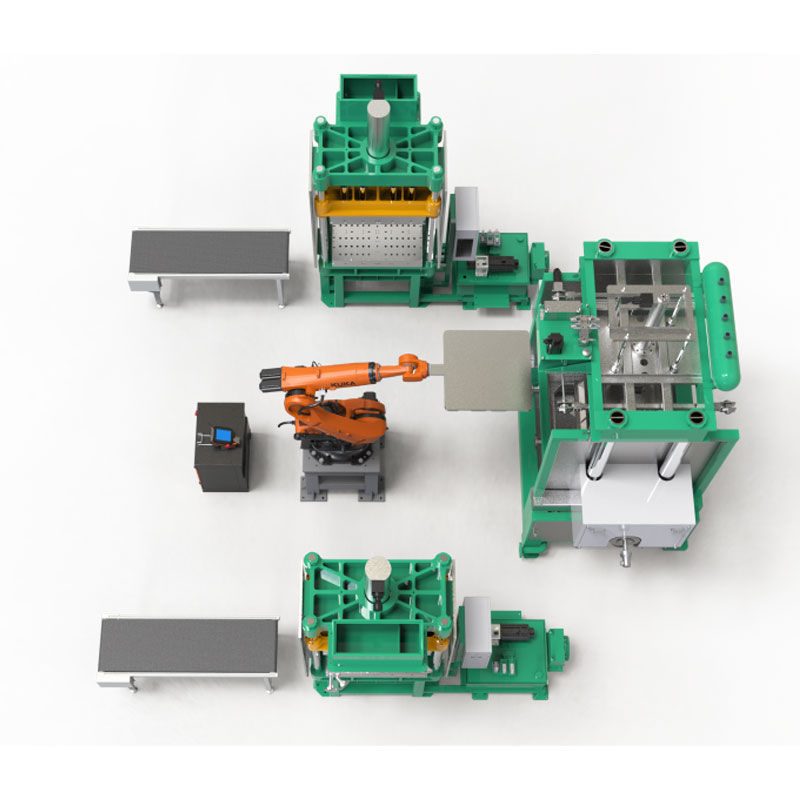
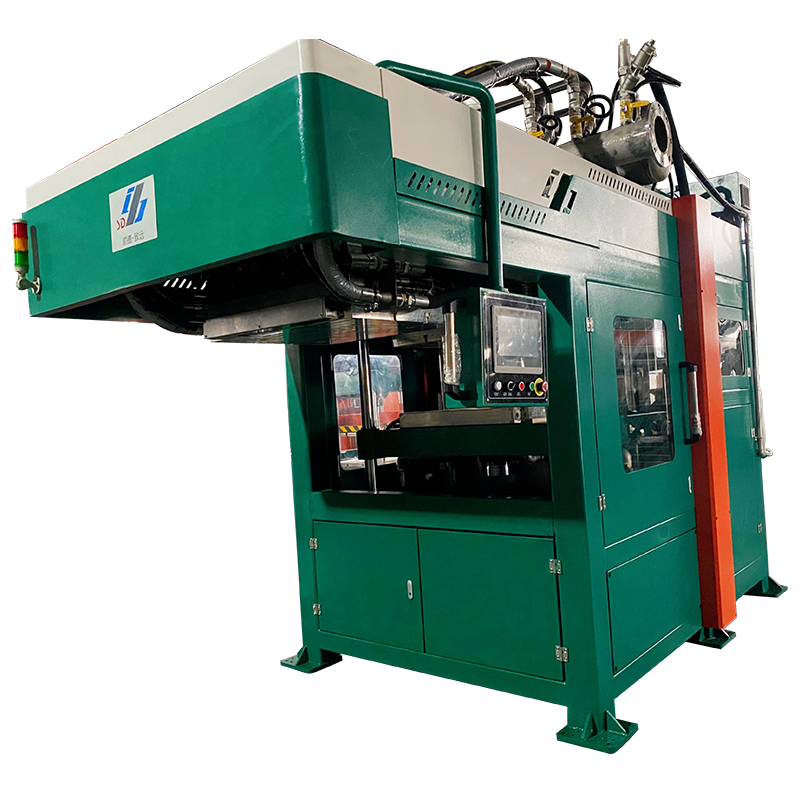
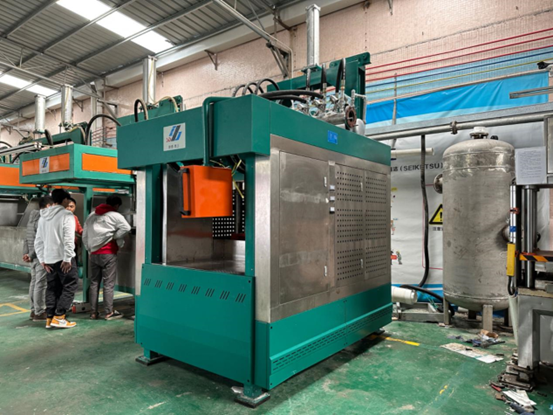
Foshan Shunde Zhiyuan Pulp Molding Equipment Co., Ltd. designs and manufactures egg tray machines with energy efficiency as a core engineering priority — because we know that lower energy consumption means higher profit for our customers. Our machines incorporate several energy-efficient design features:
Well-insulated hot presses: All our hot presses feature high-temperature insulation on platens, side panels, and piping to minimize heat loss — reducing hot press energy consumption by 15–25% compared to uninsulated designs.
Optimized vacuum systems: We carefully size vacuum pumps for each machine configuration, use high-efficiency pump models, and design vacuum manifolds to minimize pressure drop and leaks. Optional VSD vacuum pumps are available for maximum efficiency.
Variable-speed drive options: Our machines can be configured with VSDs on main motors and vacuum pumps, allowing optimal speed matching and reducing energy consumption during partial-load operation.
Gas/steam heating options: For facilities with access to natural gas or industrial steam, our machines can be configured with gas-fired or steam-heated hot presses — reducing energy costs by 30–60% compared to electric heating.
Efficient mechanical design: Our machines use precision-machined components, proper bearing selection, and optimized drive systems to minimize mechanical friction and energy loss.
Modern PLC control with energy monitoring: Our control systems include energy monitoring features, allowing you to track consumption by system and identify optimization opportunities. Smart control logic optimizes operation based on production demand.
Heat recovery options: For high-volume operations, we can integrate heat recovery systems that capture waste heat from the hot press exhaust and reuse it for facility heating or process water preheating.
Because we also manufacture molded pulp products ourselves, our machines are designed based on real production experience — we know exactly where energy is wasted and how to eliminate it, because we have optimized our own production lines for maximum efficiency.
Explore our complete equipment range to see our egg tray machine models, from entry-level semi-automatic machines to high-capacity fully automatic production lines. Whether you are purchasing a new machine or looking to improve the energy efficiency of an existing line, our engineering team can provide a customized energy efficiency assessment, specific energy consumption data, and recommendations for reducing operating costs and boosting profit.
Contact our technical team today for an energy efficiency consultation, machine quotation, or to discuss how we can help you reduce energy consumption and increase profitability in your egg tray business. Lower energy costs mean higher margins — and we are here to help you achieve both.
 +86 189 2452 1063
 s-dzhiyuan@163.com
 18924521063


Online Message

Follow Us


Top
