


News

News
When buyers compare pulp molding lines, the headline numbers are output per hour and machine price, but the layout of the forming station determines how those numbers are actually reached. A single-station machine and a dual-station machine can look similar from the outside while delivering very different cycle times, labor needs and product flexibility. This guide explains how forming stations are arranged, what each layout suits, and how station count interacts with output, mold change and labor so a buyer can match the machine to a real production plan rather than a catalog figure.
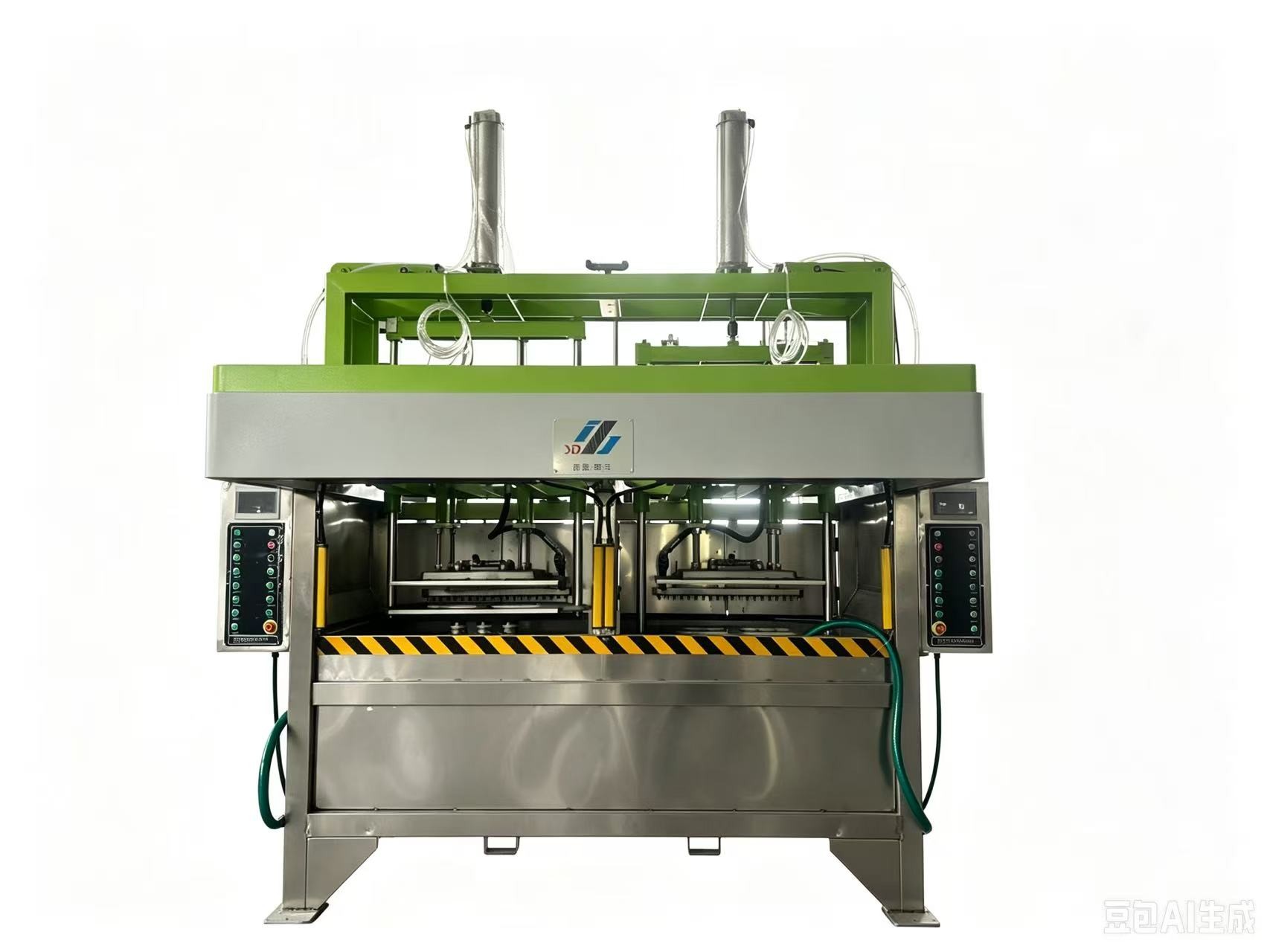
Forming is the stage where diluted fiber slurry is drawn against a screened mold under vacuum, depositing a wet fiber mat that becomes the tray or insert. The station controls the mold's movement between the slurry dip, the transfer to drying, and the ejection of the formed part. Everything downstream of forming — hot pressing, stacking, trimming — runs on the rhythm the forming station sets. That rhythm, in turn, depends on how many stations share the work.
A single-station machine carries one forming position: the mold dips, forms, lifts and ejects within one cycle before the next dip begins. The configuration is the simplest mechanically, uses one cylinder, and carries the lowest upfront cost and smallest footprint.
The trade-off is that the forming, waiting and ejection steps happen in series, so cycle time cannot be overlapped. Output stays modest, which keeps the line suited to small batches, startup production, low-volume specialty inserts and budget-constrained projects. The single-cylinder single-station molding machine is the typical entry point for buyers who need reliable egg trays or basic packaging at lower volumes rather than maximum throughput.
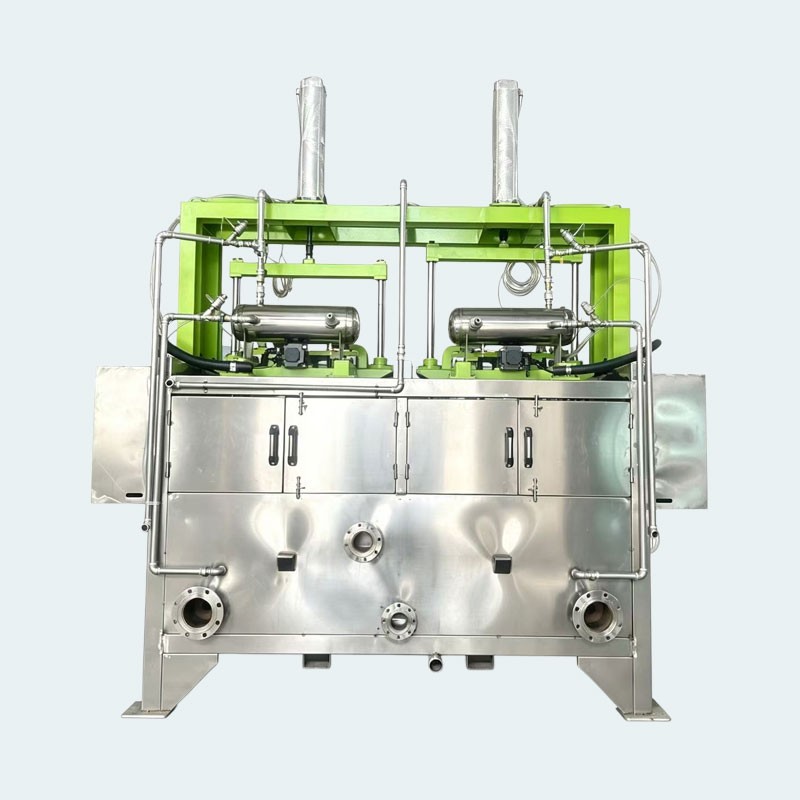
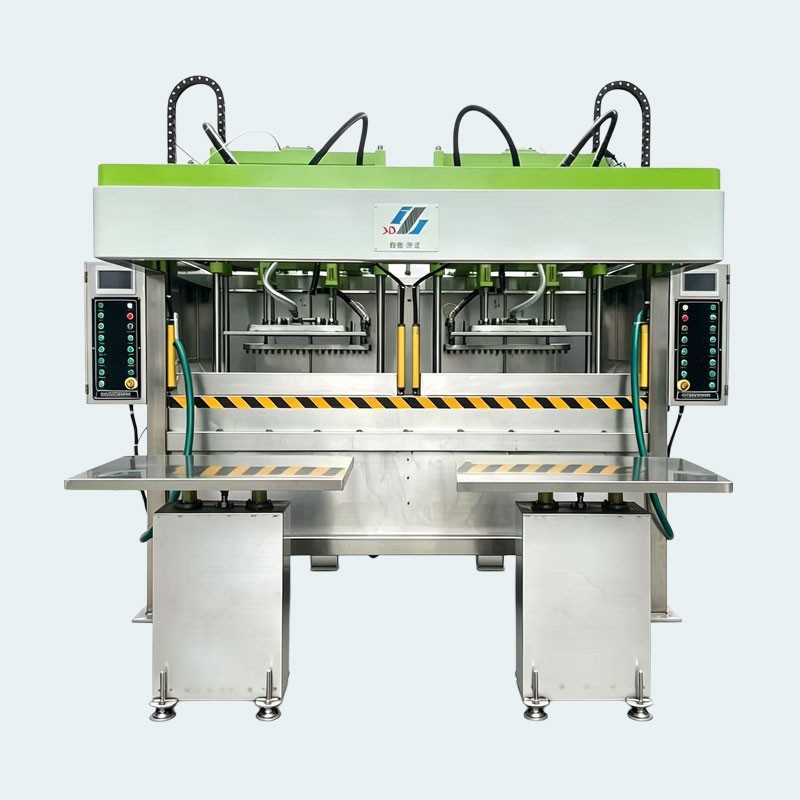
A dual-station machine places two forming positions on one frame, usually driven by separate cylinders, so one station can dip and form while the other transfers or ejects. The overlap lets the line keep producing instead of waiting on a single position, raising pieces per hour without buying a second machine.
Two stations also widen product flexibility: different molds can be mounted, and the layout supports faster mold change for buyers who run several tray shapes. The dual-cylinder dual-station forming machine targets higher output and quick mold change between products, which matters for suppliers serving several customers or seasonal orders.
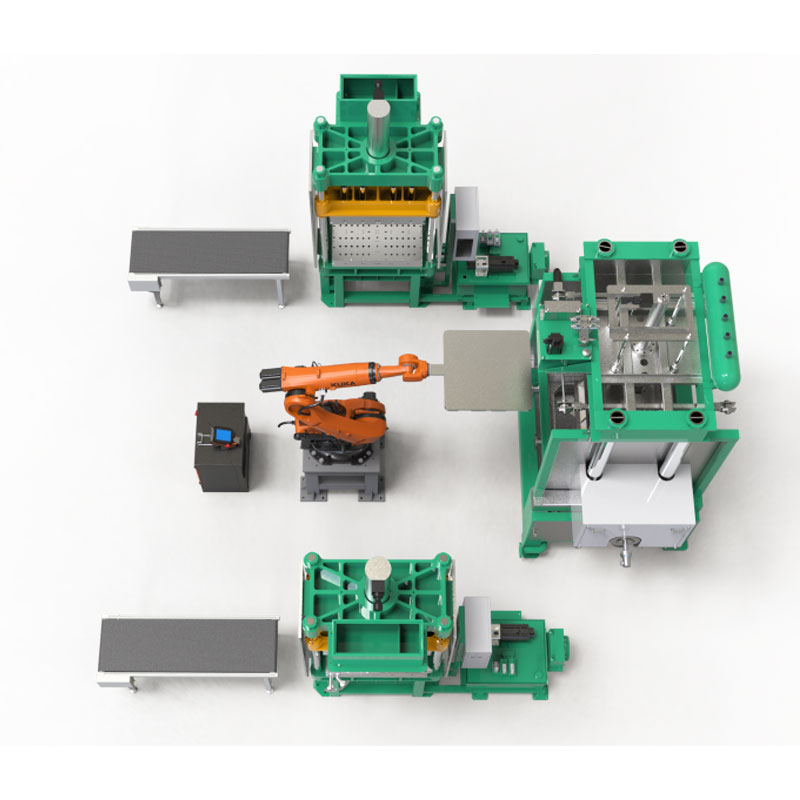
At the top of the range, an automatic forming system chains multiple stations with robotic arms or automatic transfer that move the wet mat from forming to drying and stacking without manual handling. The automatic pulp molding forming system with robotic arm runs a continuous sequence, reduces operator attendance, and suits large-volume egg tray or packaging lines where consistency across long runs matters.
These systems are planned as integrated packages rather than standalone machines: forming, transfer, hot press and stacking are matched so no station bottlenecks another. Their cost and footprint are larger, and they are justified only when steady high volume and labor reduction offset the investment.
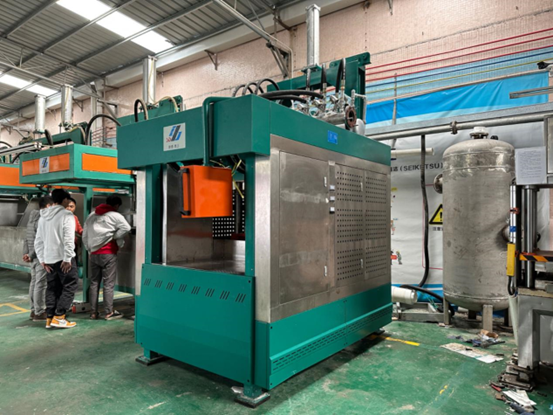
Output does not simply double when stations double. Real throughput depends on whether the overlapping steps actually free each position, and on whether drying and downstream handling can keep pace. A dual-station forming machine starved by slow hot pressing will not reach its rated number, and an automatic system without enough drying capacity accumulates wet parts.
Labor moves the other way from station count toward automation. Single-station lines need an operator to watch the cycle and assist ejection; dual-station lines reduce manual steps through overlap; robotic systems cut attendance to monitoring and occasional resets. Buyers should price total operating cost — power, labor and maintenance — rather than purchase price alone, especially where local wages make automation pay back sooner.
Station layout cannot be chosen in isolation. Drying capacity, mold count per position, vacuum draw and slurry consistency all set the ceiling on what a given layout delivers. Product geometry also matters: deep or thick-wall parts take longer to form and dry, which weakens the benefit of added stations, while thin, simple trays benefit most from overlap. Match the layout to the product's cycle demand, then size drying and mold cavities to support it.
For a first line with modest volume and a tight budget, a single-station machine is the realistic entry and can grow as demand proves out. For steady commercial volume and a changing product mix, the dual-station layout offers overlap and flexibility at a middle cost. For large-scale continuous production with labor reduction as a goal, the automatic robotic system is the justified choice. Review the full pulp molding equipment range to compare these configurations side by side.
The forming station layout is where purchase price, output and labor meet. Choosing a layout that outruns your demand wastes capital; choosing one below demand caps growth and forces overtime. Share your target hourly output, product mix and current labor cost with the supplier so they can size stations, drying and automation together. If you have a volume plan or product drawing, contact our engineering team for a station-layout recommendation and a matched line quote.

 +86 189 2452 1063
 s-dzhiyuan@163.com
 18924521063



Online Message

Follow Us


Top
