


News
News
Coffee is one of the packaging categories under the most pressure to drop plastic. Single-serve capsules arrive in plastic or aluminium holders, retail displays are built from EPS foam, and sample sets ship in plastic trays. Molded pulp offers a fiber-based replacement that can be shaped to hold a capsule precisely, embossed with a brand mark, and recycled in the paper stream after use. For coffee roasters, capsule brands and private-label packaging buyers, the question is no longer whether molded pulp works — it is how to specify it so the capsule fits, the shelf display looks right and the tooling cost pays back. This guide covers the formats available, the design details that decide success, and what to request from a supplier.
Three forces are pushing the change. Regulation comes first: extended producer responsibility fees punish hard-to-recycle plastic, and several markets now restrict single-use plastic where a fiber alternative exists. Retailer requirements come second, with grocery and specialty chains setting recyclability targets for packaging on shelf. Consumer expectation comes third — buyers increasingly read the pack before they read the origin, and a fiber tray signals a brand that has done the work.
Molded pulp also solves a practical problem plastic does not: it cushions. A capsule carrier made from molded fiber absorbs impact through the wall and the ribbed surface, protecting the capsule seal during parcel shipping without a separate foam insert. That single-material approach reduces SKU count and simplifies the recycling message printed on the box.
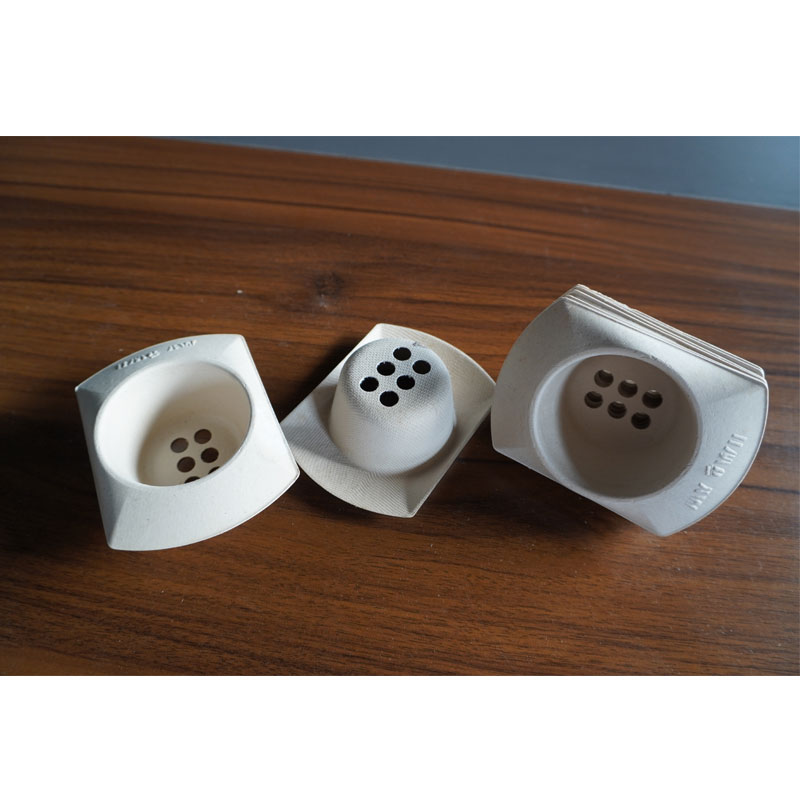
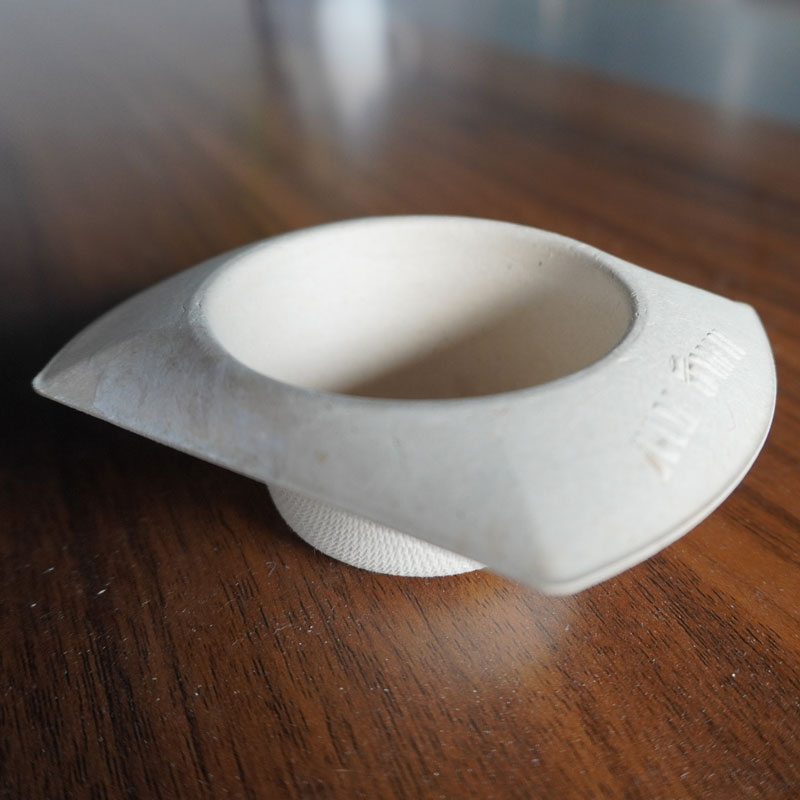
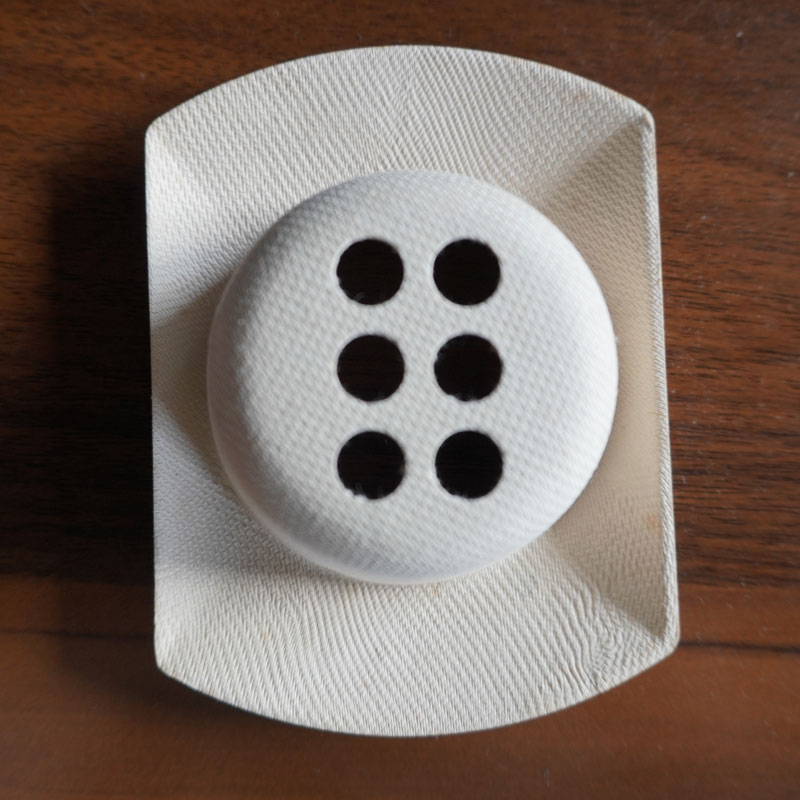
A single-capsule carrier is the smallest unit in the range: a shallow tray with one cavity, a raised rim and often a set of holes that let air escape when the capsule is pressed in and keep it seated during transit. The molded pulp coffee tray shown on this site is exactly this format — white wet-press fiber, embossed brand mark, built for retail display and capsule cup packaging. Multiple carriers can be arranged in a grid inside a gift box or sampler carton.
For shelf and counter display, the pulp tray doubles as the presentation surface. Cavities are laid out in rows, the fibre texture reads as natural rather than industrial, and the tray can carry printing or a debossed logo on the flat edge. Because the tray is structural, the outer carton can be lighter, which cuts freight cost per unit.
Coffee gift sets combine capsules, a brewer or cups, and a card. Molded pulp inserts hold each item in its own cavity so nothing moves, and the whole assembly can be recycled together. The same approach used for molded pulp tea party boxes applies to coffee: a fiber base, fiber lid and molded cavities, with no plastic blister inside.
The finish decision comes before the format decision, because it sets what the brand can print and how the tray feels in hand.
Wet press trays are formed against a polished mold and hot pressed in the same cycle, giving a smooth, dense surface with a clean white or light tone. Wall thickness is controlled and the edges are crisp, which suits capsule carriers and retail display trays where a premium look matters. Embossing holds fine detail on a wet press surface, so a logo or a "recyclable" mark can be molded directly into the tray.
Dry press trays keep more of the fiber's natural texture and are generally cheaper per unit at low cavity counts. They suit shipping inserts and structural partitions where appearance is secondary, and they accept printing well because the surface is more open. For a gift set with a visible insert, wet press is usually worth the extra cost; for a transport shipper behind a closed box, dry press is the sensible choice.
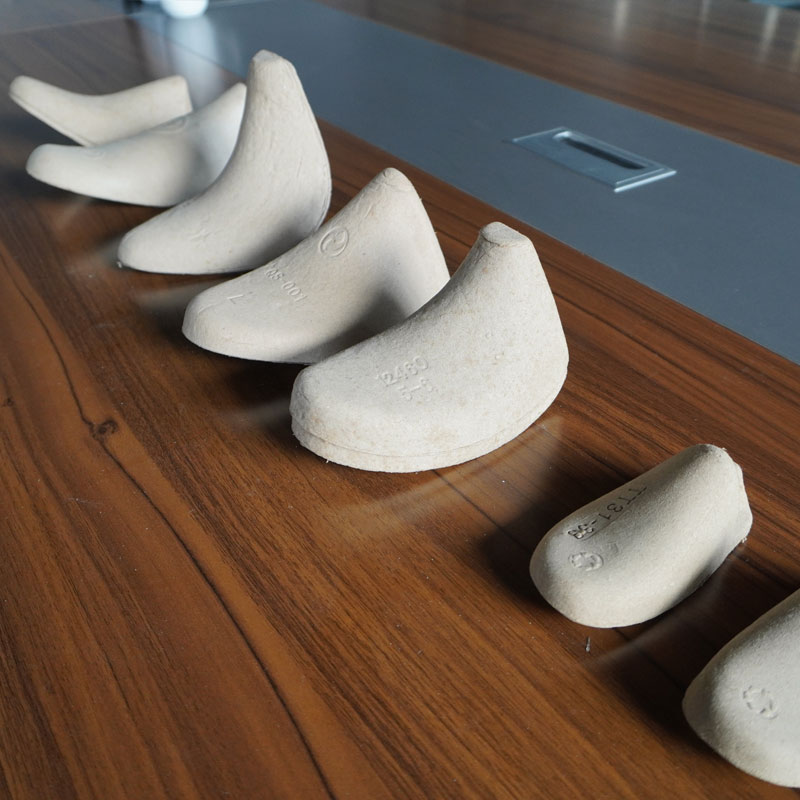
The embossed mark visible on the tray in the photos above is the cheapest branding in molded pulp. It is cut into the mold once, adds nothing to unit cost, never smears, and survives the recycling stream. Printing is still an option for multi-colour graphics, but for a capsule carrier that will be handled and photographed, a debossed logo plus a one-colour print on the outer carton usually reads cleaner than a fully printed insert.
Coffee packaging is a custom-tooling category: the cavity geometry is specific to one capsule and often to one arrangement. Tooling lead time and amortisation therefore drive the business case more than machine price. A supplier with in-house molded pulp product capability and its own mold shop can usually sample in weeks rather than months, which matters if a launch date is fixed.
Before committing, ask for: the cavity drawing checked against your actual capsule; a sample run in the finish you intend to buy; the number of cavities per mold and the resulting hourly output; tooling cost, lead time and ownership; minimum order quantity per SKU; fiber type and food-contact documents; and packing density for export cartons. If the supplier cannot answer the cavity-fit question with a physical sample, keep looking.
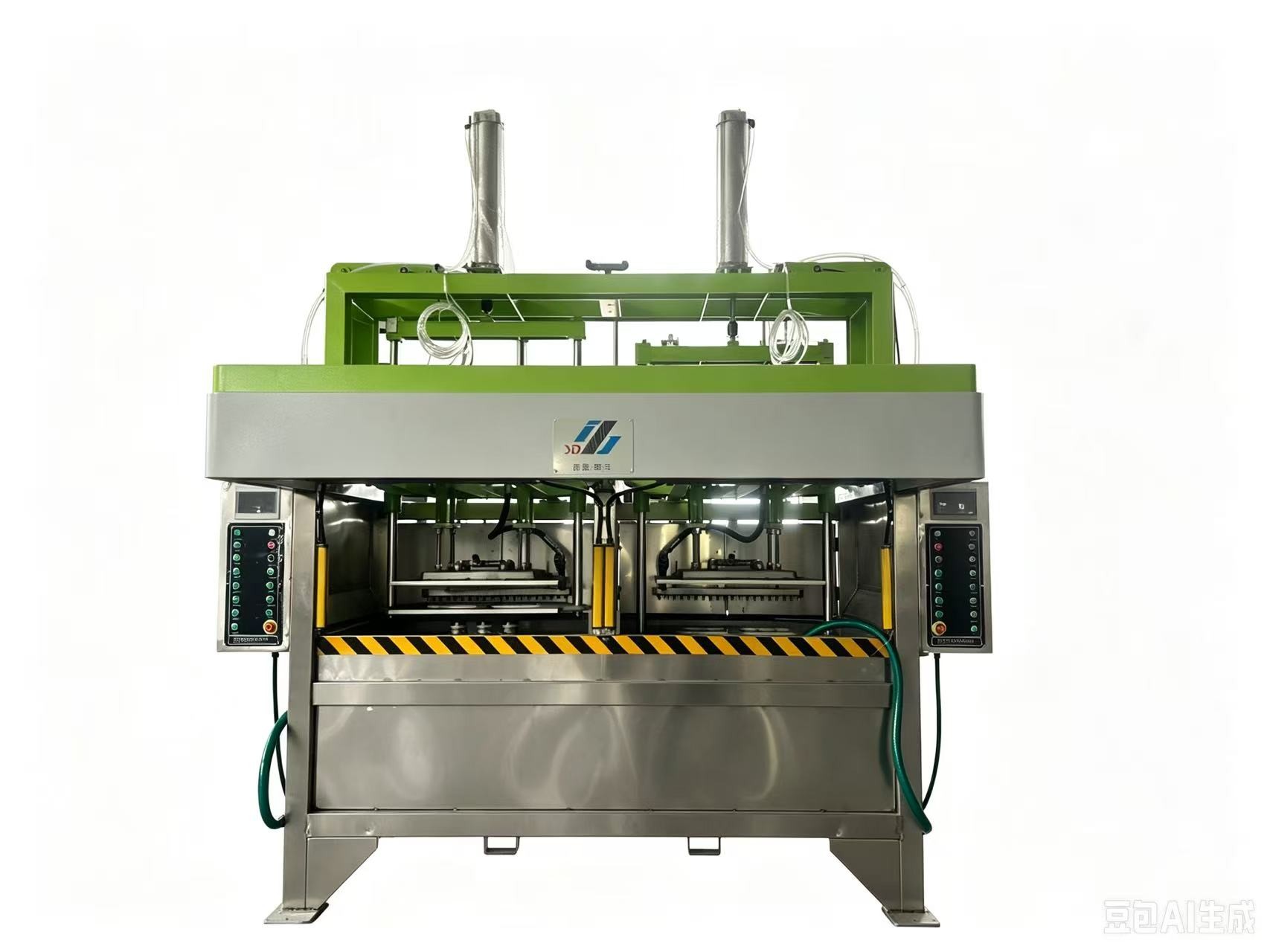
Molded pulp is a credible, market-ready replacement for plastic capsule holders and foam retail trays, and it carries a sustainability story the brand can actually print. Choose wet press for anything the consumer sees, dry press for what sits inside a closed shipper, and settle the capsule fit and embossing during tooling rather than after the first production run. If you are specifying coffee packaging or sourcing the line that makes it, contact our team with your capsule dimensions and target volume — we can quote both the packaging and the forming equipment behind it.

 +86 189 2452 1063
 s-dzhiyuan@163.com
 18924521063



Online Message

Follow Us


Top
